Journey to Justice
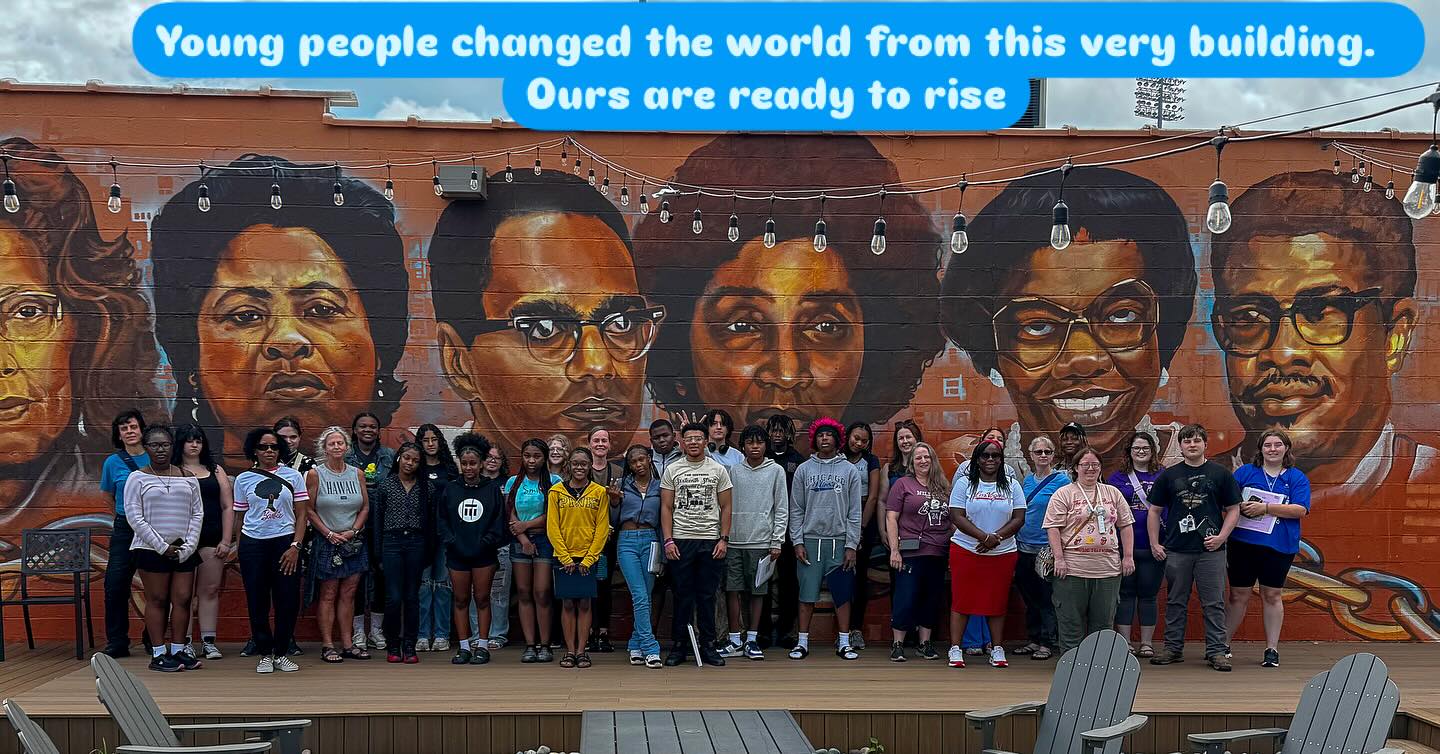
Journey to Justice is the Social Justice program’s flagship experiential course. Through immersive travel in the American South, students engage directly with the history of racial injustice and the ongoing struggle for civil rights. They study how public memory shapes our understanding of the past, listen to first person accounts from Freedom Fighters, and reflect on how the legacy of racial violence continues to shape society today.
Journey to Justice teaches students how historical knowledge becomes ethical action. By connecting classroom learning with place-based storytelling, students learn to analyze injustice, understand community narratives, and think critically about what it means to work toward racial equity in the present.
What Students Experience
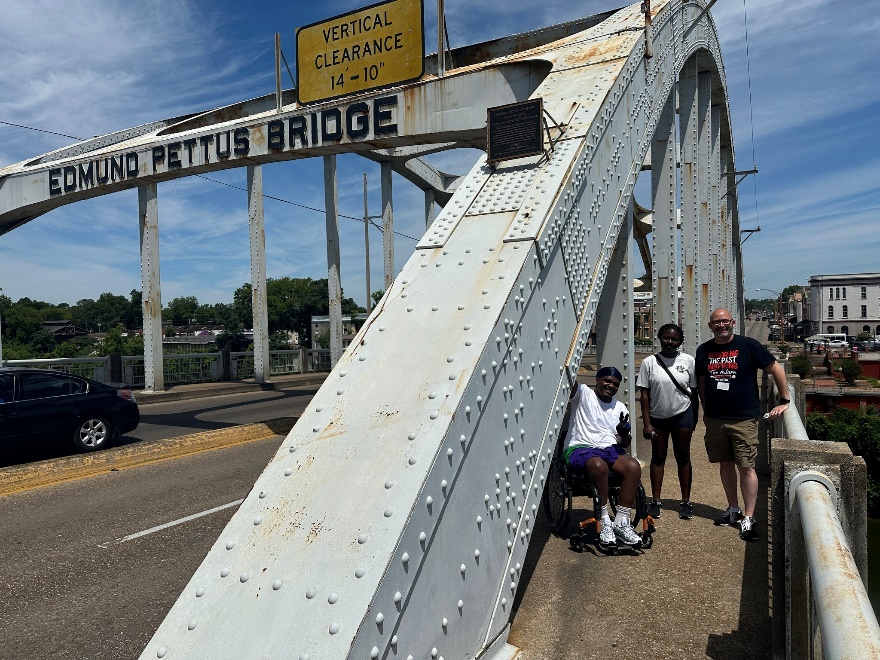
Journey to Justice combines travel, documentary research, public history, youth mentorship, and reflective dialogue. Students visit sites such as the National Memorial for Peace and Justice, the Legacy Museum, Kelly Ingram Park, the 16th Street Baptist Church, the Edmund Pettus Bridge, and the Equal Justice Initiative. At each site they wrestle with questions of memory, accountability, courage, and the long arc of justice.
Many Social Justice majors also serve as Journey to Justice mentors, providing leadership for high school participants, facilitating nightly conversations, and supporting youth as they process difficult material.
Student Voices
“As a mentor, staying up late with students and being there for them as they processed each day was one of the most meaningful parts of Journey to Justice. Playing cards at a tiny hotel lobby table while talking about the lynching memorial or the melted shoes from the Selma to Montgomery march helped us create moments of grounding after reliving the horrific histories of oppressed peoples in America. Walking through the National Memorial for Peace and Justice for the first time is something I can still see clearly. The weight of every name on every pillar stayed with me, as did the realization of how many more pillars it would take to account for those whose lives have been shaped by mass incarceration.” Robert, Class of 2024
“Choosing a single moment from Journey to Justice is nearly impossible, but standing outside the 16th Street Baptist Church was life changing. We had just walked through Kelly Ingram Park and learned about the Children’s March, where school-aged kids protested for their rights and were met with violence. While waiting to enter the church, we met a survivor of the Children’s March. It reminded me that historical events are lived by ordinary people, not only by famous figures. Meeting someone who had survived that era grounded the recency of segregation in a way textbooks never could.
The biggest impact of Journey to Justice was realizing how different the stories we heard from civil rights activists were from the polished narratives I learned in high school. Hearing the unfiltered truth about the violence and resistance that shaped this nation made me understand how deeply racism is woven into our structures. It sickens me to know how many Americans remain unaware of this history. Journey to Justice unveils the truths we must face, talk about, and heal. Loudly.” Claire, Class of 2024
Recognition and Impact
Journey to Justice has been recognized locally and regionally for its contribution to justice education and community engagement.
Journey to Justice received the Rev. Kevin Flemming Justice Award in 2024 from Leadership Everyone.
This award honors programs that foster collaboration, civic awareness, and a commitment to equity in the region.
In 2025, Dr. Valerie Stein received the Willie Effie Thomas Award as part of the Mayor’s Celebration of Diversity Awards.
Presented by the Evansville and Vanderburgh County Human Relations Commission, this award recognizes individuals whose programs foster inclusion, provide meaningful diversity education, and celebrate community diversity. Journey to Justice was honored for its transformative impact on students and the broader community.
These awards highlight Journey to Justice as a model of community engaged learning and a cornerstone of the Social Justice major at UE.
What Journey to Justice Contributes to the Major
Journey to Justice strengthens the Social Justice curriculum by giving students:
- Direct experience with public history and community storytelling
- Opportunities to analyze how racial violence is remembered and contested
- Structured reflection that builds empathy, ethical awareness, and civic responsibility
- Practice in youth mentorship and facilitation
- A deeper understanding of how historical injustices shape present systems
- Leadership opportunities through paid mentor roles
The course prepares students for careers in public service, advocacy, education, public history, law, community organizing, and any field where ethical leadership and social analysis are essential.
Office Phone
812-488-1103
Office Email
vs9@evansville.edu
Office Location
Room 341, Olmsted Administration Hall
