Tea-Hut Excavation
On-Campus Fieldwork and Excavation in Archaeology
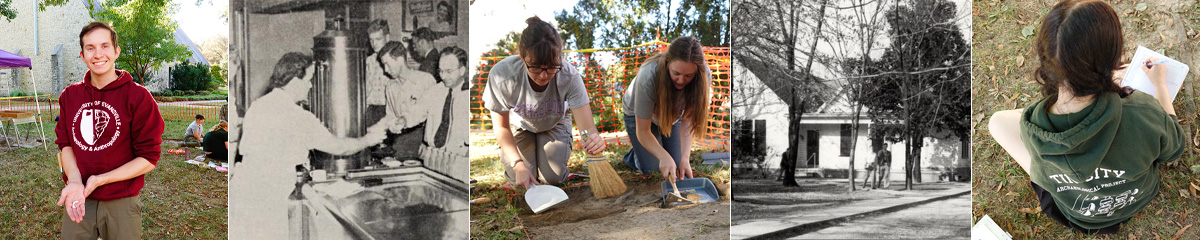
Every other fall semester our majors have the opportunity to excavate a site, fondly referred to as the Tea Hut, located right on campus as part of the course ARCH340 – Field Techniques in Archaeology.
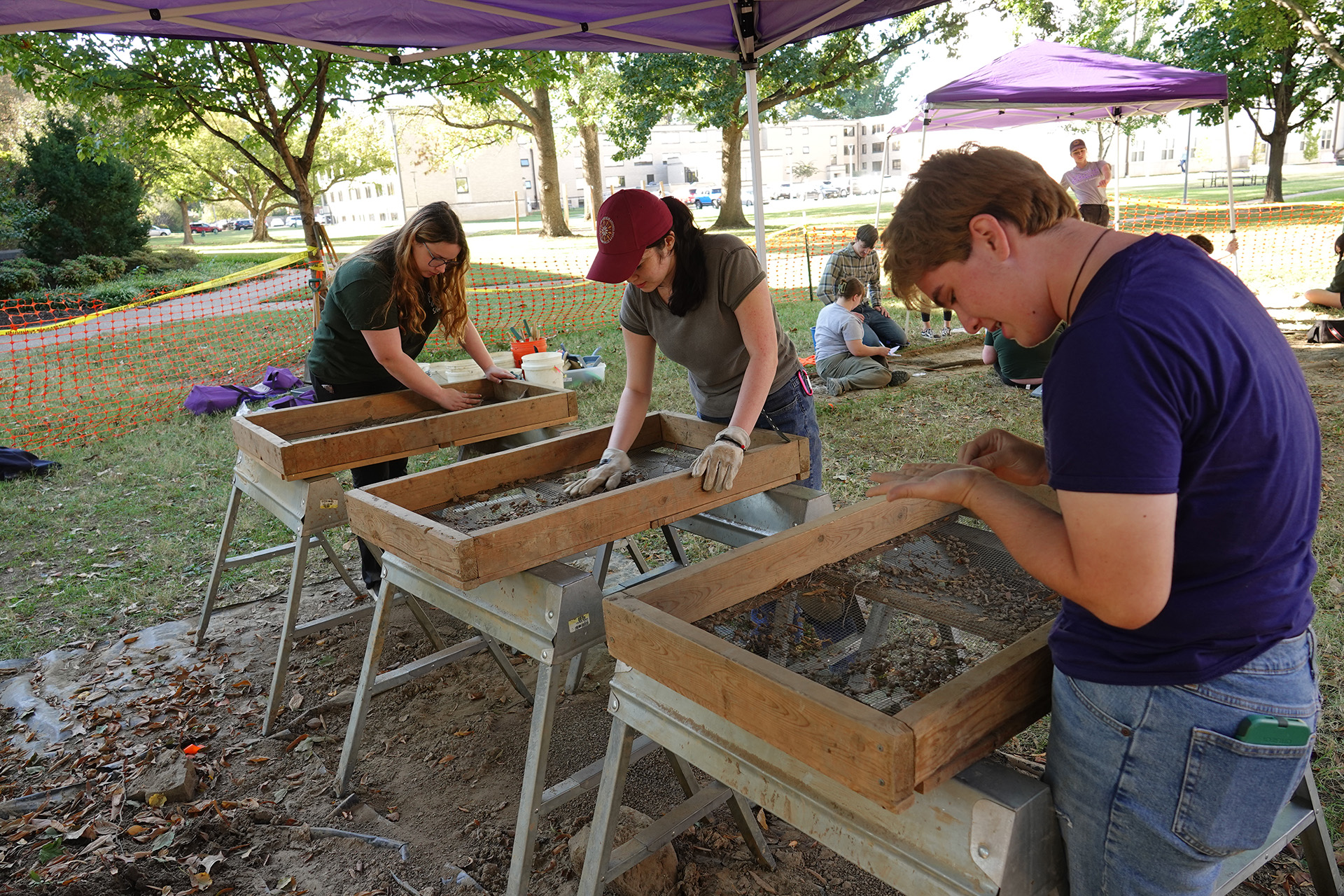
This course is designed to teach students how to do pre-excavation archival research, excavate carefully at a shallow site, record findings and locational data using the latest tools of the trade, and clean and conserve artifacts in our lab. Additional class projects give students the chance to do surface survey, identify and date artifacts, read a soils map, and present information to the public. Motivated students can even take advantage of previous season's material to pursue grant-funded undergraduate research projects.
History of the Site
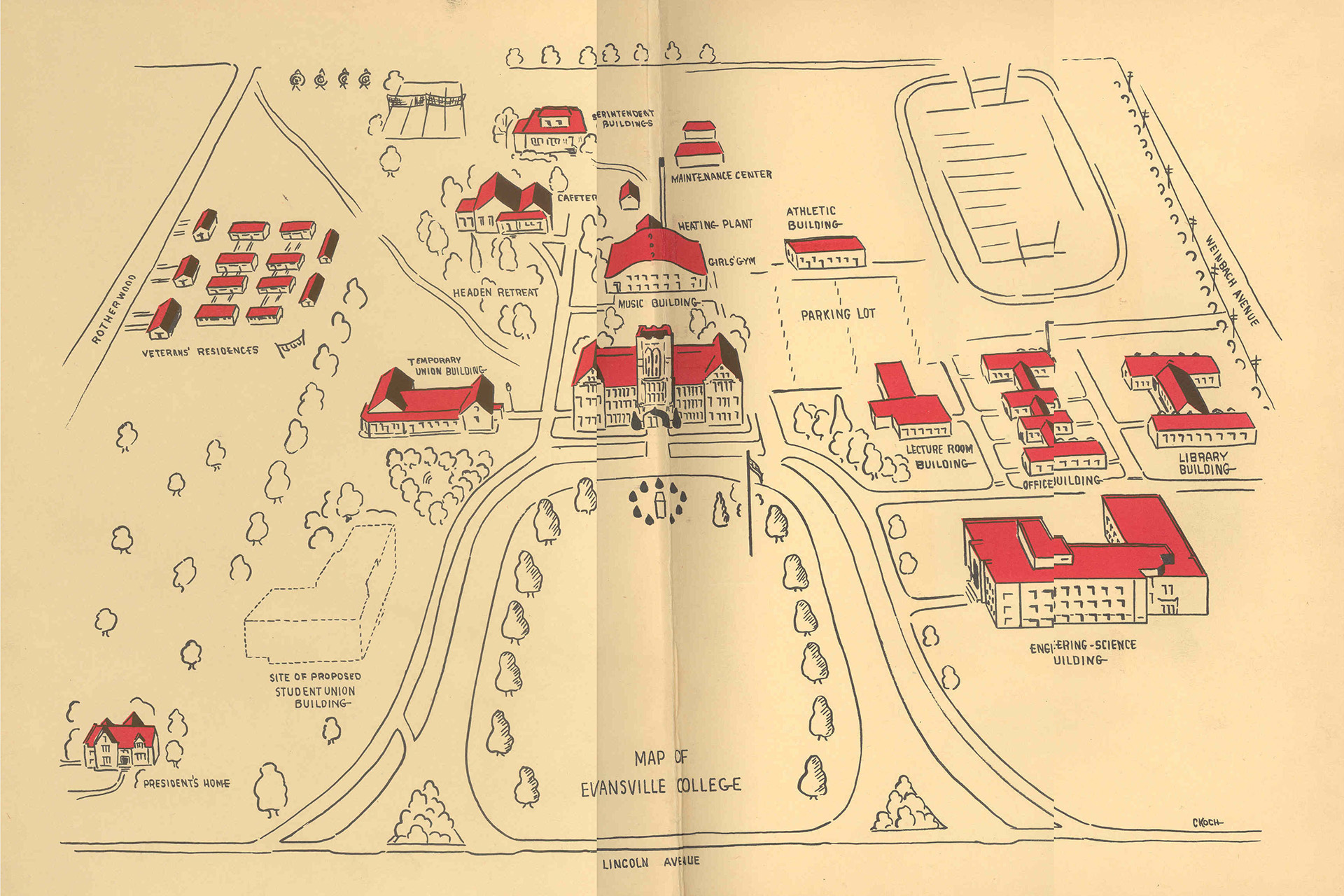
The original site of the “Tea-Hut” existed long before this campus, starting with a small farmhouse owned by the Sullivan family. After the sale of the property, the cottage was renovated to serve as a hangout spot for the students. In 1920’s, with the help of the local YMCA and YWCA branches, the frame house’s three rooms were converted to a tearoom for the women, a recreational room for the men, and a committee room. Additionally, the home economics class began to serve food to students, with the Tea-Hut acting as a cafeteria. It took another 20 years for these renovations to be completed, when another wing was added to the building, along with a jukebox and new sandwich counter. Despite these upgrades, students still struggled with the limited space in the former farmhouse. After serving as home to several university departments following its closure as a café in 1951, the historic Tea-Hut was demolished in 1972, and a tree now marks the site where the campus landmark once stood.
In the Field Techniques course, archaeology students learn more about how students experienced the Tea-Hut through their material culture (i.e. the things people use and eventually discard). The artifacts discovered shed light on the lives of the young men and women who ate and socialized here.